
What Is a Balanced Diet and How Do You Actually Calculate Your Macros?
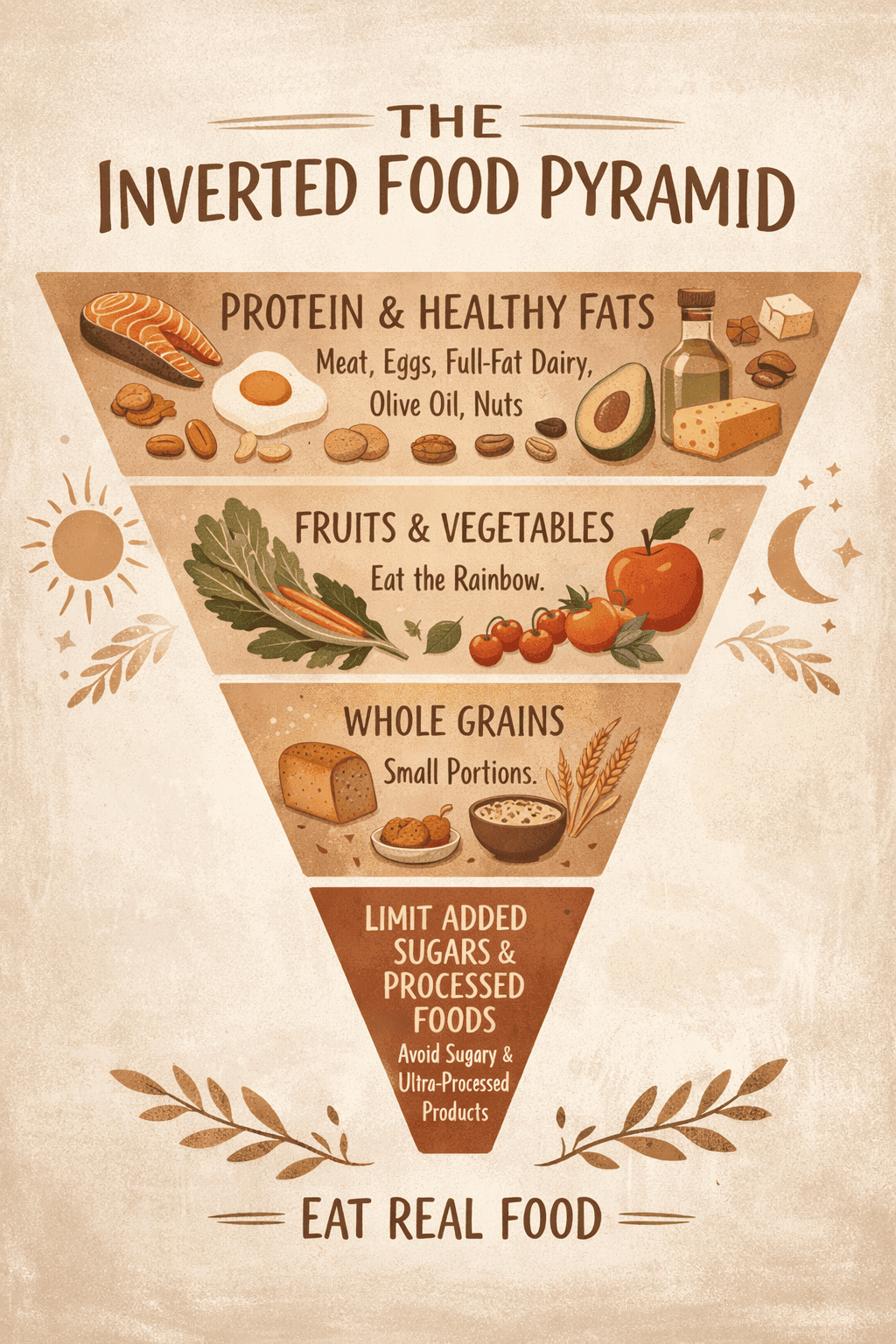
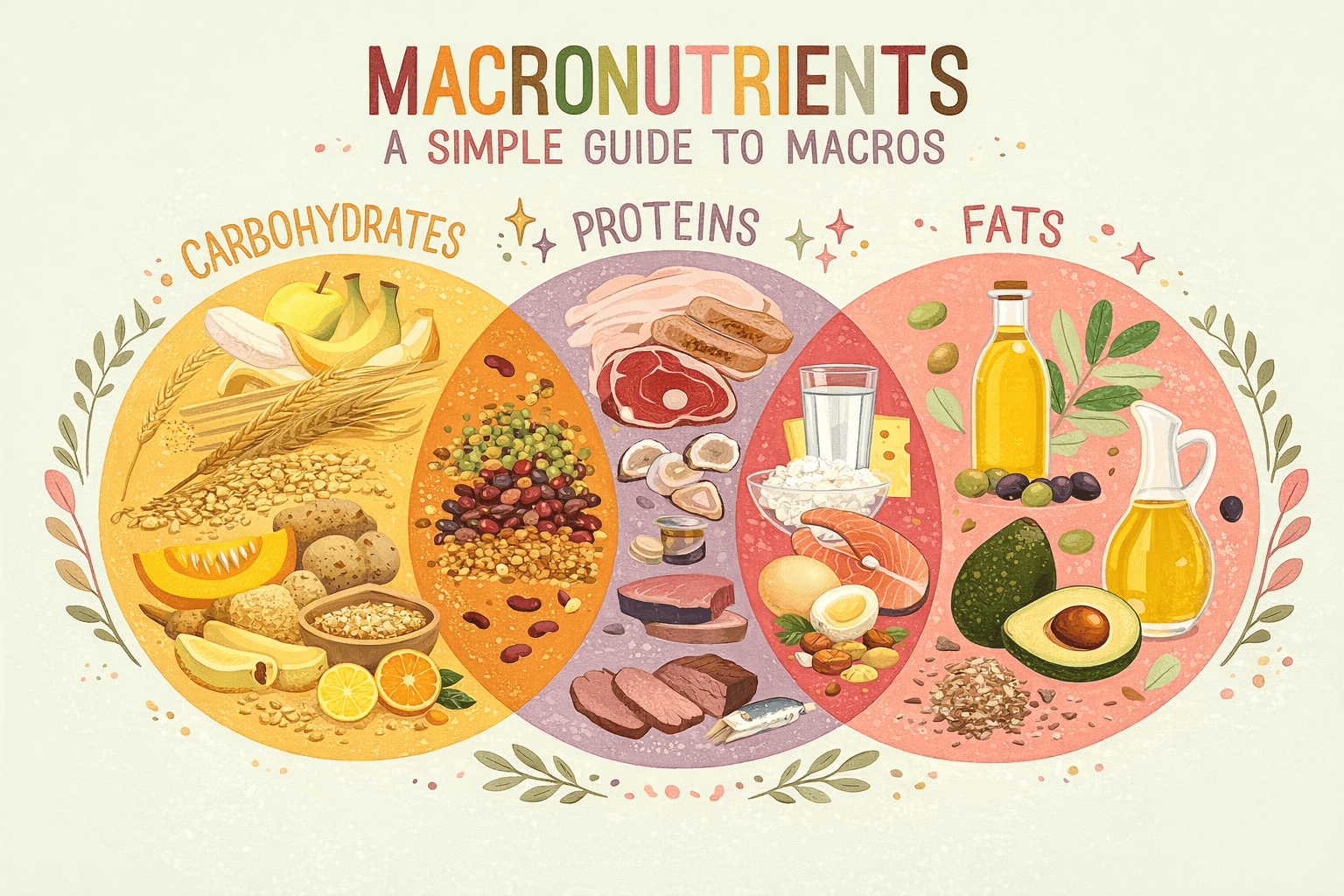
A practical guide to understanding macronutrients, caloric conversion, and what a real day of eating looks like. We hear "balanced diet" constantly from doctors, trainers, and food packaging. But what does balance actually mean in practice? And how do nutrition professionals calculate the exact amounts of protein, carbohydrates, and fat a person needs each day? A balanced diet is one that provides all the essential nutrients — macronutrients, micronutrients, water, and fiber in proportions that support your body's daily functions, energy demands, and long term health. It's not about eating less or cutting food groups; it's about eating the right amounts of the right things. At the center of this balance are three macronutrients: protein, carbohydrates, and fat. Each one plays a distinct role, and each one provides a specific amount of energy per gram — a concept known as the Atwater factors. The Atwater factors: how food becomes energy Before calculating individual macronutrient needs, it helps to understand how many calories each macronutrient provides. These conversion values, established by chemist Wilbur Atwater in the late 19th century, remain the standard used in nutrition science today. Caloric conversion factors Protein4 kcal per gram Carbohydrates4 kcal per gram Fat9 kcal per gram Alcohol7 kcal per gram Fat provides more than twice the energy of protein or carbohydrates per gram which is why small amounts carry significant caloric weight, and why fat targets are often expressed as a percentage of total intake rather than grams per kilogram. The three macronutrients P Protein 4 kcal/g C Carbs 4 kcal/g F Fat 9 kcal/g Protein Protein is the building block of muscle, enzymes, hormones, and immune cells. It supports tissue repair, satiety, and metabolic rate. Requirements are expressed relative to body weight in kilograms. Protein requirement Protein (g) = 0.8 – 2.2 g × body weight (kg) 0.8 g/kg is the minimum for sedentary adults. Active individuals and athletes may require 1.6–2.2 g/kg to support muscle synthesis and recovery. Carbohydrates Carbohydrates are the body's preferred energy source, particularly for the brain and working muscles. They fuel everything from cognitive function to high-intensity exercise. Like protein, needs are scaled to body weight and adjusted by activity level. Carbohydrate needs CHO (g) = 3 – 10 g × body weight (kg) Sedentary adults typically need 3–5 g/kg. Endurance athletes training at high volumes may need up to 10 g/kg to maintain glycogen stores. Fat Dietary fat supports hormone production, fat-soluble vitamin absorption (A, D, E, K), brain health, and cell membrane integrity. Rather than a per kilogram calculation, fat is set as a percentage of total daily caloric intake. Fat intake target Fat = 20% – 35% of total daily calories To convert to grams: Fat (g) = (Total kcal × fat%) ÷ 9. For example, 30% fat from a 2,000 kcal diet = (2,000 × 0.30) ÷ 9 = 67 g of fat per day. A worked example: 70 kg moderately active adult Let's put the formulas to work. Consider a 70 kg person with a moderate activity level and a total daily energy target of 2,200 kcal. Protein ~25% Carbs ~48% Fat ~27% Step-by-step calculation Protein: 1.6 g × 70 kg = 112 g → 112 × 4 = 448 kcal Carbs: 4 g × 70 kg = 280 g → 280 × 4 = 1,120 kcal Fat: 2,200 − 448 − 1,120 = 632 kcal ÷ 9 = ~70 g Total: 2,200 kcal · Fat represents ~29% of total — well within the 20–35% guideline. What this looks like on a plate Here's how those targets might be distributed across a full day of eating — a sample meal plan built around whole, minimally processed foods. Sample balanced day — 70 kg adult ~2,200 kcal · 112g P · 280g C · 70g F Breakfast Greek yogurt, oats, mixed berries, walnuts 30P · 65C · 14F Lunch Grilled chicken breast, brown rice, roasted vegetables, olive oil 38P · 75C · 16F Snack Apple, 2 tbsp almond butter 5P · 35C · 16F Dinner Baked salmon, quinoa, steamed broccoli, avocado 39P · 105C · 24F Daily total 112g P · 280g C · 70g F ≈ 2,196 kcal "Balance is not about perfection at every meal — it's about the overall pattern of eating across days and weeks." The bigger picture Macronutrient targets are a framework, not a rigid prescription. Individual needs shift with age, health status, body composition goals, and activity type. These formulas give you a starting point — a rational, evidence-based range to work within rather than rules to follow blindly. What stays constant across virtually every evidence-based dietary pattern: prioritize whole foods, include adequate protein at each meal, keep fat sources varied and unsaturated where possible, and choose carbohydrates that also deliver fiber, vitamins, and minerals — not just calories. The formulas do the math. The food choices do the rest.