Why America’s Nutrition Guidelines Just Got a Major Reset and Why It Matters

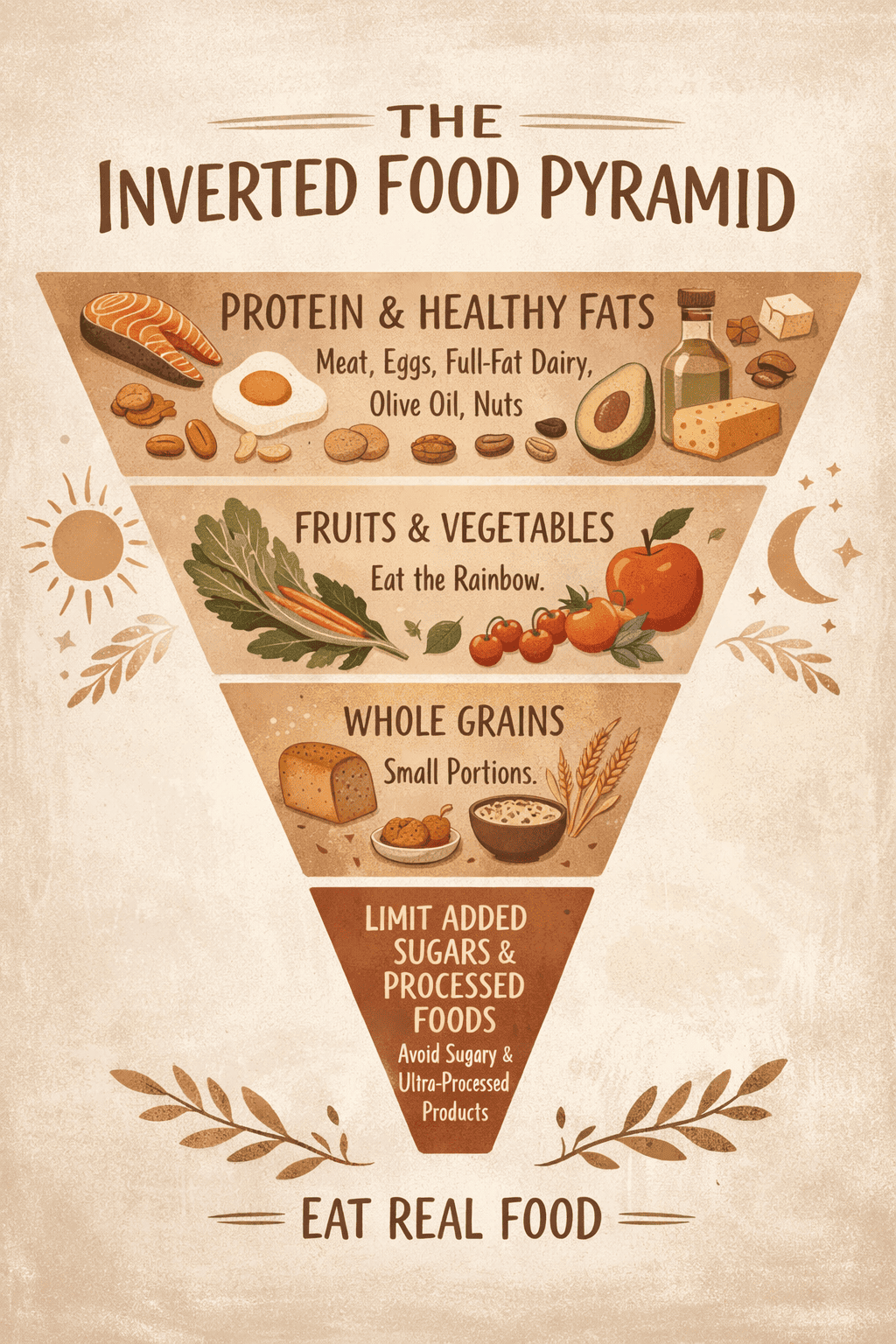
On January 7, 2026, the U.S. government released the latest Dietary Guidelines for Americans (2025–2030), marking one of the boldest shifts in federal nutrition advice in decades. At the heart of the update is a new inverted food pyramid that flips decades of conventional wisdom on its head.
What the New Guidelines RecommendUnlike traditional models that start with grains at the base, the inverted pyramid places protein, dairy, and healthy fats at the top signaling that Americans should prioritize these foods. Next, fruits and vegetables hold significant space, with whole grains at the narrow bottom, meaning smaller emphasis in relative terms. This pyramid is paired with a simple overall message: “Eat real food.”
The major written recommendations include:
* Prioritize high quality protein at every meal: meat, poultry, seafood, eggs, and plant proteins like beans and lentils. * Consume full fat dairy products rather than low fat varieties. * Focus on whole foods and reduce highly processed foods, especially ready to eat packaged items high in sugar and salt. *Eliminate added sugars and non nutritive sweeteners from healthy diets with a strong emphasis on avoiding them in children’s diets. *Choose healthy fats from whole food sources (olive oil, nuts, seeds, avocados) and reintegrate certain saturated fat sources like butter or beef tallow. *Tailor food intake to age, activity level, and health goals.
Most of this advice is common sense and echoes longstanding principles of healthy eating more whole fruits and vegetables, less added sugar, and fewer ultra processed foods than typical American diets.
How This Differs From Previous Guidelines
The biggest departure is visual and conceptual:*Old System — MyPlate (2011–2026): A plate graphic showed a balance of fruits, vegetables, grains, and proteins, with dairy as an addition. This model was designed to be intuitive and actionable for everyday meals. *New System — Inverted Pyramid: Instead of proportion on a plate, hierarchy is shown in triangle form, suggesting that protein and fats should be “largest” and grains smaller — a reversal of previous food group emphasis.