Why America’s Nutrition Guidelines Just Got a Major Reset and Why It Matters

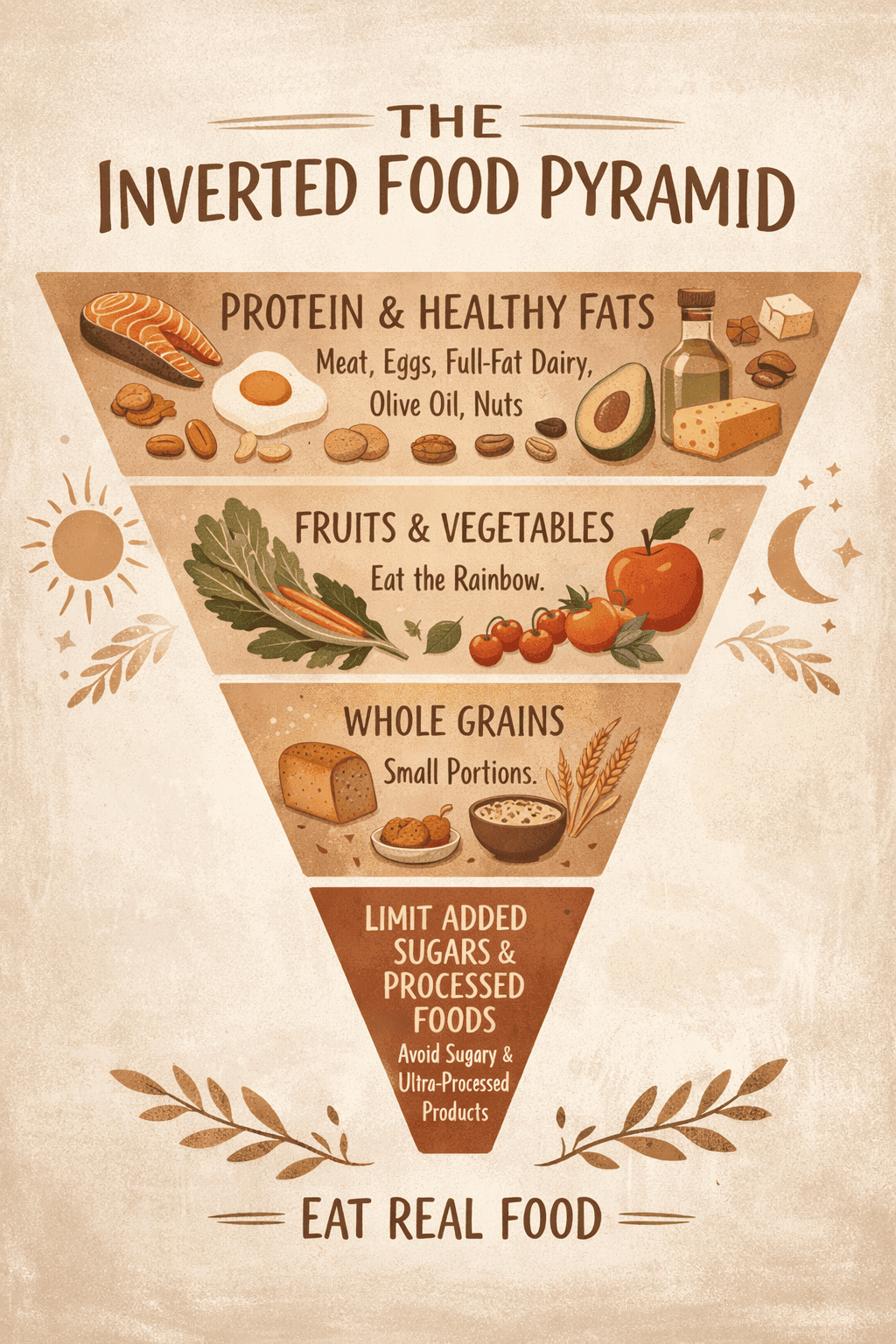
On January 7, 2026, the U.S. government released the latest Dietary Guidelines for Americans (2025–2030), marking one of the boldest shifts in federal nutrition advice in decades. At the heart of the update is a new inverted food pyramid that flips decades of conventional wisdom on its head.
What the New Guidelines Recommend
Unlike traditional models that start with grains at the base, the inverted pyramid places protein, dairy, and healthy fats at the top signaling that Americans should prioritize these foods. Next, fruits and vegetables hold significant space, with whole grains at the narrow bottom, meaning smaller emphasis in relative terms. This pyramid is paired with a simple overall message: “Eat real food.”
The major written recommendations include:- Prioritize high quality protein at every meal: meat, poultry, seafood, eggs, and plant proteins like beans and lentils.
- Consume full fat dairy products rather than low fat varieties.
- Focus on whole foods and reduce highly processed foods, especially ready to eat packaged items high in sugar and salt.
- Eliminate added sugars and non nutritive sweeteners from healthy diets with a strong emphasis on avoiding them in children’s diets.
- Choose healthy fats from whole food sources (olive oil, nuts, seeds, avocados) and reintegrate certain saturated fat sources like butter or beef tallow.
- Tailor food intake to age, activity level, and health goals.
Most of this advice is common sense and echoes longstanding principles of healthy eating more whole fruits and vegetables, less added sugar, and fewer ultra processed foods than typical American diets.
How This Differs From Previous GuidelinesThe biggest departure is visual and conceptual:
- Old System — MyPlate (2011–2026): A plate graphic showed a balance of fruits, vegetables, grains, and proteins, with dairy as an addition. This model was designed to be intuitive and actionable for everyday meals.
- New System — Inverted Pyramid: Instead of proportion on a plate, hierarchy is shown in triangle form, suggesting that protein and fats should be “largest” and grains smaller — a reversal of previous food group emphasis.
The guidelines also take a stronger stance on added sugar and ultra processed foods than before — for example, recommending no added sugars as part of a healthy diet and urging outright avoidance of highly processed packaged foods. Previous editions set limits (like less than 10% of calories from added sugar) but were less strict especially for children.
Contradictions and ControversiesDespite the simple slogan, experts have flagged several inconsistencies:
- Protein emphasis vs. actual need: Americans already consume more than enough protein — so elevating it to the most prominent place in the pyramid may not align with actual nutritional gaps.
- Fats and saturated fat: The guidelines still recommend keeping saturated fat under 10% of total calories, yet the new pyramid highlights foods high in saturated fats (e.g., red meat, full fat dairy). That visual prominence could mislead people into eating more saturated fat than recommended for heart health.
- Whole grains confusion: The pyramid’s bottom position for whole grains seems to de emphasize them, even though the written guidance still encourages 2–4 servings a day. This disconnect between text and graphic is confusing.
- Science vs. messaging: Some critics say the process behind the guidelines deviates from independent scientific review traditions, adding ideological and political influence to what was meant to be strictly evidence based advice.
What This Means for Everyday Eating
At its core, the new guidance underscores something Americans have heard before: choose whole, nutrient dense foods over processed items, reduce sugar, and build meals you can sustain long term. But the how, especially the inverted pyramid may take education and context to interpret correctly. It’s less intuitive than the familiar plate image and may send mixed messages without careful explanation. If you’re planning meals or guiding families, it’s worth pairing these federal guidelines with personalized advice, especially for people with specific health goals, cultural preferences, or dietary needs. These guidelines provide a framework, but real world application still demands nuance.